Saturday, 23 August 2014

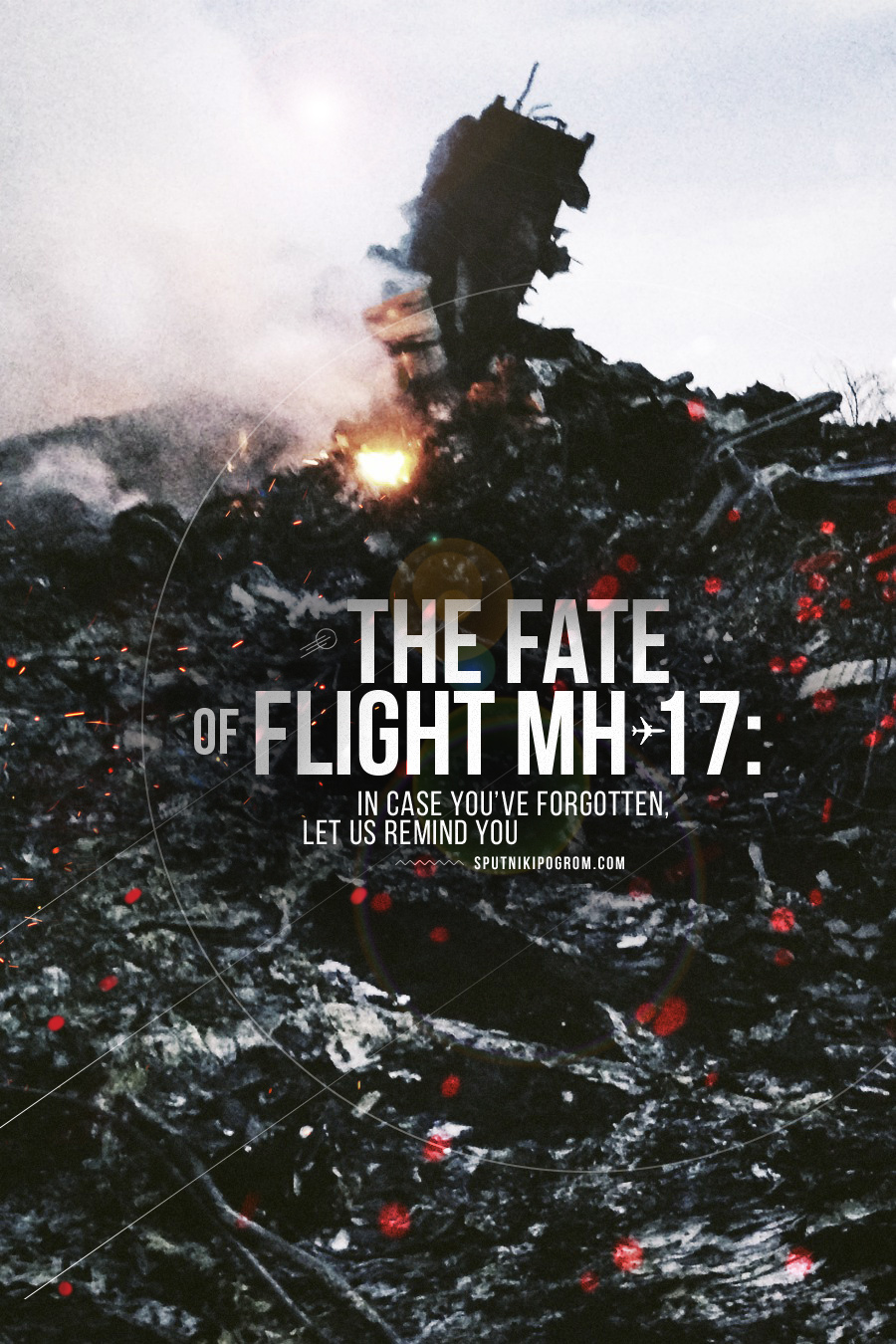
The fate of flight MH-17: in case you’ve forgotten, let us remind you

Source

Downed almost a month ago, the MH-17 airliner tragedy was given the impact scale of the assassination of Archduke Ferdinand, it should have gathered strengthening outrage and grown into a justifiably scandalous international event, but somehow this didn’t happen. The world has still to get a clear answer to the question “who shot down this airliner?” And the investigation by the media has been slothful at best.

Let’s sort out what we already know.


Wednesday, 20 August 2014

Why the Ukraine Crisis Is the West’s Fault

Good reading

Source

The Liberal Delusions That Provoked Putin
By John J. Mearsheimer

According to the prevailing wisdom in the West, the Ukraine crisis can be blamed almost entirely on Russian aggression. Russian President Vladimir Putin, the argument goes, annexed Crimea out of a long-standing desire to resuscitate the Soviet empire, and he may eventually go after the rest of Ukraine, as well as other countries in eastern Europe. In this view, the ouster of Ukrainian President Viktor Yanukovych in February 2014 merely provided a pretext for Putin’s decision to order Russian forces to seize part of Ukraine.
But this account is wrong: the United States and its European allies share most of the responsibility for the crisis. The taproot of the trouble is NATO enlargement, the central element of a larger strategy to move Ukraine out of Russia’s orbit and integrate it into the West. At the same time, the EU’s expansion eastward and the West’s backing of the pro-democracy movement in Ukraine -- beginning with the Orange Revolution in 2004 -- were critical elements, too. Since the mid-1990s, Russian leaders have adamantly opposed NATO enlargement, and in recent years, they have made it clear that they would not stand by while their strategically important neighbor turned into a Western bastion. For Putin, the illegal overthrow of Ukraine’s democratically elected and pro-Russian president -- which he rightly labeled a “coup” -- was the final straw. He responded by taking Crimea, a peninsula he feared would host a NATO naval base, and working to destabilize Ukraine until it abandoned its efforts to join the West.
Putin’s pushback should have come as no surprise. After all, the West had been moving into Russia’s backyard and threatening its core strategic interests, a point Putin made emphatically and repeatedly. Elites in the United States and Europe have been blindsided by events only because they subscribe to a flawed view of international politics. They tend to believe that the logic of realism holds little relevance in the twenty-first century and that Europe can be kept whole and free on the basis of such liberal principles as the rule of law, economic interdependence, and democracy.
But this grand scheme went awry in Ukraine. The crisis there shows that realpolitik remains relevant -- and states that ignore it do so at their own peril. U.S. and European leaders blundered in attempting to turn Ukraine into a Western stronghold on Russia’s border. Now that the consequences have been laid bare, it would be an even greater mistake to continue this misbegotten policy.
U.S. and European leaders blundered in attempting to turn Ukraine into a Western stronghold on Russia’s border.

Sunday, 17 August 2014

The Russian appeal to Germany

Source


My name is Egor Prosvirnin, I am the chief editor of the Russian site www.sputnikipogrom.com which advocates European values. I’ve heard that one of the aspects of life that Europeans, and Germans especially,cherish is history. If we were to recall recent history, we would remember that a vast army of 300,000 Soviet troops along with 5,000 tanks, 1,500 aircraft and 10,000 artillery pieces (including tactical nuclear weapons) simply left the then just-united Germany without firing a shot.
It was an operation unprecedented in scope and brevity, when the entire Soviet army withdrew literally to open fields. Tens of thousands of Soviet officers, obeying the orders of the supreme command, went from their warm barracks to live in moldy tents set up in the middle of sodden snow-covered fields. In many instances along with their families.

For what?

Monday, 11 August 2014

A brief guide to the Russian psyche

Source

The collapse of the American designed and built Iraq, the American intervention into the Ukraine sparking civil war, the collapse of Libya, the victory of the anti-American Assad in Syria, and the thousands of victims of US-backed military repression in Egypt has given rise to a reasonable conclusion: that the great American nation has a poor understanding of the world around us. In particular, it is evident that Americans believe that the rest of the world and its many peoples are exactly the same, just struggling at different stages of development. Roughly speaking; Iraq — is the same as America, it just needs developmental help and advice in order to fully achieve democracy, like throwing out its bloody dictator. Where that view led to is now well known.


Saturday, 9 August 2014

Just imagine... If Russia had toppled the Canadian government

Source

Just imagine if the democratically-elected government of Canada had been toppled in a Russian-financed coup, in which far-right extremists and neo-Nazis played a prominent role.

That the new unelected 'government' in Ottawa cancelled the law giving the French language official status, appointed a billionaire oligarch to run Quebec and signed an association agreement with a Russian-led trade bloc.

Just imagine…

Friday, 8 August 2014

Putin isn’t trying to win the Cold War - he’s refighting the battles of World War I

It's a must read. Learn the facts!

Source

World War I was not only one of the longest and bloodiest conflicts in history, but arguably the most seminal. The war was a catalyst for the Great Depression, the rise of the brutal ideologies of Nazism, Communism, and Fascism, numerous regional wars over scraps of bygone empires, and, of course, World War II. How Europe's leaders stumbled into the disastrous war remains one of the great unresolved puzzles in modern history. Mountains of books and articles have tried to explain how an assassin's bullet fired in Sarajevo ignited the great catastrophe of the 20th century.

The answers never seem satisfactory. Crude explanations designed to establish German guilt, popular until the 1990s, have gradually been replaced with a more nuanced picture, where the other belligerents, including Britain and France, share the burden of responsibility more equally for launching a war that killed more than 10 million people. But the focus on what happened in London, Paris, and Berlin has masked the importance of the events in the East. Russia, too, shares responsibility for the catastrophe in Europe. As the world remembers the start of the war 100 years ago this week, understanding Russia's strategic calculus at the time can help decode Moscow's recent behavior in Ukraine.

Europe Furious That Putin Dares To Retaliate To Sanctions, Blames Economic Slide On Kremlin

Source

Either Europe is run by a bunch of unelected idiots, or... well, that's about it.
After blindly doing the US' bidding over all propaganda matters Ukraine-related, and following just as blindly into round after round of US-inspired sanctions, sanctions to whose retaliation Europe would be on the frontline unlike the largely insulated US, Europe appears to be absolutely shocked and is apoplectic that after several rounds of sanction escalations, Russia finally unleashed its own round of sanctions and yesterday announced a 1 year ban on all European food imports, something which will further push Europe into a triple-dip recession as already hinted by Italy yesterday.
In fact, Europe is so stunned by this unexpected "politically-motivated" retaliation by Russia, it issued a press release.
Statement by Commission spokesman on the announcement of measures by the Russian Federation

The European Union regrets the announcement by the Russian Federation of measures which will target imports of food and agricultural products. This announcement is clearly politically motivated. The Commission will assess the measures in question as soon as we have more information as to their full content and extent. We underline that the European Union's restrictive measures are directly linked with the illegal annexation of Crimea and destabilisation of Ukraine. The European Union remains committed to de-escalating the situation in Ukraine. All should join in this effort. Following full assessment by the Commission of the Russian Federation's measures, we reserve the right to take action as appropriate.
Surely, Putin is waiting for the European Commission to also issue a #hashtag before he starts shaking in his boots.